Buy Gold Coin Online

  • Subscribe to our RSS feed.
  • Twitter
  • StumbleUpon
  • Reddit
  • Facebook
  • Digg
Showing posts with label World News. Show all posts

Wednesday, 20 January 2010

2010 coin of The year award

Posted on 00:47 by Unknown
2010 coin of The year award had been announced on 12 January 2010. A Coin of the year international panel of judges concluded voting 8 January 2010 and the public online voting for the People’s Choice Award ended 10 january 2010. World Coin News is a sister publication to Numismatic News that covers the field of world coinage. This year’s competition featuring coins dated 2008 was hotly contested. The Coin of the year winner was chosen in two rounds of voting. The first determined the winners of 10 categories and the second round chose the Coin of the Year from those 10 initial winners.
Coin of the year award won by 20 lati issued by the Bank of Latvia. It marks the 15th anniversary of the renewal of the lats currency after Latvia regained independence from the old Soviet Union. The original design was created in 1922 by Teodors Zalkalns but never used. The new Coin of the Year also topped the Best Gold category.
People’s Choice winner won by Hungarianis 5,000 forint .925 fine silver coin designed by Gabor Gati to honor the Tokaj wine region of Hungary. There is just one round of People’s Choice voting and the nominees are handled independently of the COTY competitors. This is also the third time Hungary has won the People’s Choice Award.
The U.S. American Eagle one-ounce silver coin won the Most Popular coin category in the first-round COTY vote.
This year’s Trade coin category winner is a bimetallic 2-euro coin issued by the Central Bank of Cyprus. The coin depicts an ancient statue cross.
First-round winners include a silver 100 tenge commemorating Ghengis Khan from the Kazakhstan Mint. It topped the Most Historically Significant category, which honors persons or events of 100 or more years in the past.
In a related category of Best Contemporary Event, which marks events or persons from less than 100 years ago, a silver 10 sheqalim from the Bank of Israel that commemorates 60 years of statehood of modern Israel received the most first-round votes.
A German silver 10-euro commemorative coin topped the Best Silver Coin category. The issue honors writer Franz Kafka, who was born 125 years before, in 1883.
The Austrian Mint’s 10-euro silver coin for Abbey Klosterneuberg received the most votes in the Best Crown category. Crowns are coins that are 34 millimeters or larger in diameter and usually are silver or a base metal silver substitute.
The 65th anniversary of the Warsaw Ghetto Uprising against the Nazi occupation is the theme of the 200 zlotych gold coin issued by the National Bank of Poland that won the Most Artistic Coin category.
Winner of the title of Most Innovative Coin is an Austrian 25-euro piece that consists of a silver ring and niobium center. The niobium is colored a shimmering green by a special oxidation process and this effect celebrates the phenomenon of light. The design on the obverse shows a gas lamp of the 19th century and the other side carries a portrait of Austrian inventor Auer von Welsbach and an evolutionary series of lightbulbs.
Canada was the 10th category winner. Its $2,500 gold piece, “Towards Confederation,” was named Most Inspirational Coin. It is part of a series for the 2010 Vancouver Olympics and the design presents the full sweep of Canadian history.

World Coin News will recognize both winners Jan. 30 at the World Money Fair in Berlin. Nominations for the 2011 award can be made by anyone from among the many world coin issues dated 2009. Submit them with images and full descriptions to Lisa Bellavin at lisa.bellavin@fwmedia.com.

Source: numismaster.com, coinnews.net
Read More
Posted in World News | No comments

Thursday, 24 December 2009

Merry Christmas Everyone

Posted on 00:01 by Unknown

Just want to wish merry Christmas to everyone who is reading this post of mine. Do you know that Royal Canadian Mint has been minting a holiday special coin featuring Santa Claus on one of the coin set every year? Celebrating Life’s Special Moments, the Holiday Gift Set 2009 with a Canadian theme includes uncirculated versions of each of the denominations issued for circulation in Canada and a painted 25-cent coin. The painted Christmas coin is on the 25 cents reverse with Santa Claus drawing and three maple leaf on a green background.

Santa coinWhen I check with the Royal Canadian Mint website, The Holiday gift set for 2009 already sold out. This will be a perfect gift for coin collector who celebrate Christmas. Christmas is a major celebration and holiday in almost every country in this world.


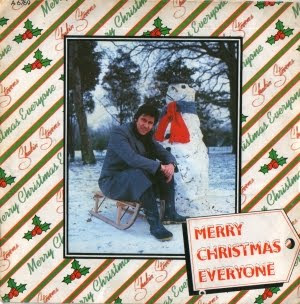
Here is "Merry Christmas Everyone" lyric, a popular festive song by the Welsh singer-songwriter Shakin' Stevens. Written by Bob Heatlie and produced by Dave Edmunds. Originally it was to be released in 1984, but was postponed a year so it wouldn't clash with Band Aid's "Do They Know It's Christmas". In 2007 the song re entered the UK top 30 and reached number 22 on the Christmas chart.

christmas song
Snow is falling
all around me
children playing
having fun

it's the season
love and understanding
merry Christmas everyone

time for parties and celebration
people dancing all night long
time for presents
and exchanging kisses
time for singing Christmas songs

we're gonna have a party tonight
I'm gonna find that girl underneath the mistletoe,
we'll kissed by candlelight

Room is swaying, records playing
All the songs, we love to hear
All I wish that everyday was Christmas
What a nice way to spend the year

We're gonna have a party tonight
I'm gonna find that girl
Underneath the mistletoe, we'll kiss by candle light

Snow is falling, all around me
Children playing, having fun
It's the season, love and understanding
Merry Christmas everyone

Oah merry Christmas everyone

Snow is falling, all around me
Children playing, having fun
It's the season, love and understanding
Merry Christmas everyone

Snow is falling, all around me
Children playing, having fun
It's the season, love and understanding
Merry Christmas everyone

Snow is falling, all around me
Children playing, having fun
It's the season, love and understanding
Merry Christmas everyone


Merry Christmas everyone. Wish everyone lots of love, joy and happines.

Source: Royal Canadian Mint, Wikipedia
Read More
Posted in World News | No comments

Wednesday, 23 December 2009

Spy Coin Story

Posted on 02:38 by Unknown
Do you still remember about Commemorative poppy quarter sparks distrust of Canada in the U.S In 2007? In the United States these coins were briefly reported as a possible 'spy tool' or bugging equipment by some US Defense Contractors unfamiliar with the odd-seeming coin and raised espionage warnings until the situation was clarified. Few days ago, The Associated Press under the U.S. Freedom of Information Act received an emails marked "Secret/NoForn".

spy coin
In the emails, released to The AP with names blacked out but job titles disclosed, Pentagon officials question whether they should warn military officers in the U.S. Northern Command, who regularly met Canadian counterparts about classified subjects that look like spy tools inside bug-proof, government meeting rooms. The rooms are known as secure compartmentalized information facilities, or SKIFs. In January 2007, the government abruptly reversed itself and said the warnings were not true. But the case remained a mystery until months later, when AP learned that the flap had been caused by suspicions over the odd-looking Canadian "poppy" quarter with a bright red flower. The silver-coloured 25-cent piece features the red image of a poppy - Canada's flower of war remembrance - inlaid on a maple leaf.

Photo by wikipedia: Corn Poppy Flower

Papaver rhoeas (common names include corn poppy, corn rose, field poppy, Flanders poppy, red poppy, and red weed) is a species of flowering plant in the poppy family, Papaveraceae. This poppy, a native of Europe, is notable as an agricultural weed (hence the "corn" and "field") and as a symbol of fallen soldiers.In Canada, poppies are distributed by the Royal Canadian Legion and the Anavets organization each fall prior to Remembrance Day. The design of the Canadian poppy consists of petals made of red plastic with a felt lining and black centre held on by a pin.

What suspicious contractors believed to be "nanotechnology" on the coins actually was a protective coating the Royal Canadian Mint applied to prevent the poppy's red colour from rubbing off. The mint produced nearly 30 million such quarters in 2004 commemorating Canada's 117,000 war dead. The Pentagon turned over the latest emails from inside its Office of the Undersecretary for Defence for Intelligence nearly two years after The AP requested them under the Freedom of Information Act. Many of the emails were censored over what the Pentagon said was national security and personal privacy.

Source: Associated Press, Wikipedia
Read More
Posted in World News | No comments

Sunday, 20 December 2009

When coin worth more then face value

Posted on 16:48 by Unknown

Do you know what will happen when coin worth more then face value? A news by Press Trust of India (PTI) reported that it will be turned into razor blade. In New Delhi,  Indian security authorities are now burdened with a new kind of border crime, smuggling of five Indian rupee coins to neighbouring Bangladesh. In Bangladesh, these coins are worth more than their face value. Syndicates are melting the coins and turning them into razor blades. In Bangladesh, these coins are worth more than their face value. Syndicates are melting the coins and turning them into razor blades.

Photo by 8en flickr: India rupee coin

According to police officials, six razor blades could be produced from a single coin and each is sold at two Indian rupees (RM.15), reported the Press Trust of India (PTI).

"This has been going on for quite some time now. We are looking into it," HR Khan, executive director, Reserve Bank of India (RBI) told the news agency.

"We are now changing the metallic content of the five-rupee coin so that the new ones will not be lucrative for melting. The new metallic content of the cupronickel coin will reduce its attractiveness for smugglers," added Khan.

Photo by shavingstuff.com: Razor blade

The clandestine activity is creating a shortage of the five-rupee coin and the RBI is now taking measures to control the distribution of the coin to prevent any abuse. Across the border, smugglers work in ramshackle workshops to melt the coins into nice razor blades that are then sold in the local markets, according to the news reports.

When coin worth more then its face value, people will melt it and gain profit from it. Do you know any other story on what will happen when your coin is Worth more then their face value? Do you know how much value is your coin nowadays?

Source: Bernama

Read More
Posted in World News | No comments

Monday, 14 December 2009

BBC-History of the World in 100 Objects

Posted on 16:52 by Unknown
British Broadcasting Corporation and British Museum via BBC Radio 4 will aired a programmes A History of the world in 100 Objects. The programmes written and presented by Neil MacGregor - the Director of the British Museum. The programmes will be in 100 separate 15-minute programmes. Neil MacGregor will talks about a single object in the British Museum collection that can tell us about a host of different things. On how the object was made, its political, economic and cultural significance, how the object came to be the museum collection. MacGregor will use objects of ancient art, industry, technology and arms as an introduction to parts of human history. The series, four years in planning, will begin in 2010 and be broadcast over 20 weeks.

Photo by BBC: Neil MacGregor

Gold coin of Croesus, c. 550BC, from modern Turkey.

Gold coin of Croesus, c. 550 BC, Modern Turkey. Photo: The Trustees of the British Museum

Due to his immense wealth, Croesus, king of the Lydian people who reigned from about 560-547BC, is thought to have been one of the first rulers to mint gold coins. Historians claim that the coin, called a croesid, depicting a lion and a bull, provides an insight into the earliest uses of currency.

Left: Olduvai handaxe, 1.2-1.4 million years old, Olduvai Gorge, Tanzania Right: Sutton Hoo Helmet, 7th century AD, Suffolk, England Photo: The Trustees of the British Museum

Handaxe found in Olduvai Gorge, Tanzania, around 1.2 million years old.

Fashioned from fine-grained, green volcanic lava called phonolite, this is one of the best surviving examples of the hand-held cutting tools which were first made in Olduvai Gorge about 1.5 million years ago. They were still in use there some 500,000 years ago by which time their manufacture and use had spread throughout Africa, south Asia, western Asia and Europe. No other cultural artefact is known to have been made for such a long time or across such a huge geographical range.

Helmet from the ship burial at Sutton Hoo, Suffolk, early 7th century AD.

In 1939, excavations at the Anglo-Saxon burial ground discovered this ornate iron helmet among treasure surrounding a man’s remains in a 7m oak ship. The level of craftsmanship, indicated by its decorative panels of tinned bronze inlaid with silver wire, signalled a radical shift in attitudes towards early Saxon society, which until then was though to have been substantially less sophisticated than the Roman period.

Chinese Zhou ritual bowl, c. 1100-1000BC, possibly from Henan Province, China.

Chinese Zhou ritual bowl, c. 1100-1000 BC, possibly Henan Province, China Photo: The Trustees of the British Museum

An inscription inside this ritual food vessel has provided historians with an account of a crucial transformation period in Chinese history when King Wu established the Zhou dynasty after conquering the Shang dynasty around 1050 BC. The practice, also employed by the Shang, demonstrates how the new rulers used the old traditions to secure their legitimacy despite the social upheaval.

Double-headed serpent, 15th-16th century AD, Mexico.

Double-headed serpent, 15th-16th century AD, Mexico Photo: The Trustees of the British Museum

This serpent embodies both how the Aztec empire flourished and the story of their destruction. The turquoise that made up the serpent was probably given in tribute to the Aztec rulers by the subject peoples of their empire and helps show the tribute system on which their empire rested. It is possible that it was one of the treasures given by Moctezuma to Cortes.
In my opinion, this program will be a great way to educate public about a history of the world using antique to tell the story. but do people listen to radio nowadays for information like this? How Neil MacGregor will be presenting in the programmes? Do everyone know every pieces of items in the British Museum he will be talking about? Its not easy to describe an antiques items just with your voice. Just my personal opinion though. Wish I can hear what do you all think.

Source: BBC News, Telegraph.co.uk, Wikipedia
Read More
Posted in World News | No comments

Saturday, 21 November 2009

Syrian man with $800K gold freed

Posted on 02:15 by Unknown
Few weeks ago, a news from CBC Canada reported about a Syrian man with $800K gold freed. Khaled Nawaya a flight instructor who was born in Saudi Arabia and holds Syrian citizenship, held on suspicion of being a national security threat after trying to bring nearly $1 million into Canada secretly has been released from custody and now says he's the victim of profiling. All of that because he has a DVD about Sept. 11 and some Hezbollah insignia.

Photo by CBC Canada: Maple Leaf gold coin that carried by Khaled Nawaya

Agents with the Canada Border Services Agency said that when Khaled Nawaya arrived at the Canada-U.S. border south of Vancouver last month, he told them he was carrying $10,000 cash. But a search of his vehicle found more than $800,000 in Canadian gold coins, $80,000 cash and other paraphernalia that agents deemed suspicious. The money has been confiscated. Officers said the search also turned up a pro-Palestinian scarf, DVDs about Sept. 11 conspiracy theories and a ring featuring the insignia of Hezbollah. Hezbollah is a Shia Islam group based in Lebanon and is listed as a terrorist organization in Canada. A Canadian Immigration and Refugee Board adjudicator released Nawaya on 12 November 2009 on the condition that he provide documentation on the source of his money.


Khaled Nawaya, 34 years old, said most of the money came from a lawsuit he won in the United States, where he had lived since 1993. Nawaya declined to comment on the politically related items the CBSA found or his decision to mislead border guards about the money.

"I want to tell everyone who's suspicious (of me) there's no reason to be suspicious, and not everyone who comes from the Middle East is a bad person."

Nawaya's Canadian lawyer admitted Nawaya's behaviour at the border did not serve him well. "He raised their alarm bells, needlessly," Phil Rankin said.

Nawaya's conditions for release require that he provide an address to authorities and check in monthly with the CBSA. Rankin said Nawaya still faces the possibility of charges for not declaring the money, which he may never get back.

This news is a reminder to all of us to check the authority regulations first before we travel between any country. What is the limit of money you can carry when you travel around any country. Do you need to declare that money and what is the procedure? How about if you bring your gold coin along? is that consider as a money in other country?


Source: CBC Canada
Read More
Posted in Europe, World News | No comments

Saturday, 14 November 2009

Latvia Lucky Coin won Coin Constrellation-2009

Posted on 03:24 by Unknown
I found this news about a Latvian Lucky Coin won an award in the Third International Commemorative Coins Contest "Coin Constrellation-2009" last month. The "Lucky Coin" won the title "Silver Coin of the Year"award. Altogether 176 coins from 21 countries participated in the competition, organized by the "Watermark Publishing House". The awards ceremony took place at the Hermitage Museum in Russia's St. Petersburg. The silver "Lucky Coin" was minted in Finland in 2008.

Obverse: A cat in the centre is featured against the background of roofs of a city. The inscription LATVIJAS REPUBLIKA is arranged in a semicircle at the top; the numeral 1 is placed in the lower part, and beneath it, the inscription LATS is arranged in a semicircle.


Reverse: Against the background of rooftops, in the centre a chimney-sweep is holding a ladder in his right hand and a coil of rope and a brush with weight in his left hand. A cat and inscription 2008 are placed lower centre.

Edge: Two inscriptions LATVIJAS BANKA (Bank of Latvia), separated by rhombic dots.

The coin called Lucky Coin because it is considered that meeting a chimney-sweep brings you a good luck. When people unexpectedly see a chimney-sweep walking down the street, they think of a wish and rub a black button for all their yearnings and desires to come true. Now and then, chimney-sweeps are even invited to weddings - as an assurance that the new family will be blessed with love, harmony, prosperity, and a flock of healthy children.

As it is not so easy anymore to meet a chimney-sweep on everyday basis, we can rub this coin featuring the sooty man proudly poised on the chimney-top surveying the city, with a cat, that tireless roof-roamer, and a sweeping wind his only companions. If you believe in miracles, the lucky button trick should work: bring good fortune to your home, and fulfil all your secret desires.

Face value: 1 lats
Weight: 22.00 g, diameter: 35.00 mm
Metal: silver of .925 fineness, quality: proof
Struck in 2008 by Rahapaja Oy (Finland)
Artists: Arvids Priedite (graphic design), Janis Strupulis (plaster model)


Source: www.baltic-course.com, wikipedia
Read More
Posted in Europe, World News | No comments

Saturday, 24 October 2009

1983 new pence, two pence that worth £500

Posted on 01:34 by Unknown
Yesterday, I read a news about a Weston couple hoping to make thousands from two pence. Brian and Penny Drury, of Palmer Street, stumbled across the rare find in a collectors' pack bought 26 years ago. Brian, aged 43, ordered the souvenir pack from a national newspaper and it has been hidden away and forgotten about since. But when Penny, also aged 43, was told last week that a 1983 two pence coin with new pence written on was valuable she told her husband who confirmed they did have one in their drawer. Brian has put the coin on eBay and is hoping to be able to clear his overdraft with the money he raises from the sale. I try to find this couple auction on eBay but cannot find them.

Photo by: Weston & Somerset Mercury

The British decimal two pence (2p) coin – often pronounced "two pee" – was issued by the Royal Mint on 15 February 1971, the day the British currency was decimalised. In practice it had been available from banks in bags of £1 for some weeks previously. As of December 2005 there were an estimated 6,421 million 2p coins in circulation. The coin was initially minted from bronze, but since 1992 it has been minted in copper-plated steel except for a few months in 1998 when bronze was used again. As copper-plated steel is less dense than bronze, post-1992 coins have been slightly thicker. The original reverse of the coin, designed by Christopher Ironside, is the Badge of the Prince of Wales: a plume of ostrich feathers within a coronet, above the German motto ICH DIEN ("I serve"). The numeral "2" is written below the badge, and either NEW PENCE (1971–1981) or TWO PENCE (from 1982) is written above.


Many people have two pence in their drawer like this couple but only 1983 2 pence with the word new pence on it consider as rare. One website states that the odds of finding a 1983 'new pence' coin are around one in 14,000,000. Consider yourself lucky if you found one of this coin. If you're intended to sale your coin, the price on eBay is between £500 to £700. If you need my advice whether to sale or keep this coin. Keep them for at least 5 years, most probably it will worth five time their current price after that. By the way, it only have a two pence face value. Why do you need to rush selling them? The price will go up every year.

Source: Weston & Somerset Mercury, Wikipedia
Read More
Posted in Europe, Rare, World News | No comments

Monday, 31 August 2009

Brasher Doubloon owner at the center of lawsuit

Posted on 18:31 by Unknown
Do you still remember about the Brasher Doubloon first gold coin made in the United States? The owner of the coin is at the center of lawsuit by Rare coin researcher William Swoger. The co-owners of the Brasher Doubloon, Steven L. Contursi of Laguna Beach, California, President of Rare Coin Wholesalers of Dana Point, California, and Donald H. Kagin, Ph. D., President of Kagin's in Tiburon, California. Plaintiff says the owners of a Brasher Doubloon reneged on a deal to pay him for information that he says shows the coin was the first made under the new U.S. government -- which would boost its value to $10 million. 

picture by: emediawire.com

The Brasher Doubloon is steeped in historic reverence and mystique. It dates to Colonial America and the dawning of the new federal government, when Spanish gold doubloons circulated alongside other foreign gold and silver as part of New World commerce. The coin takes its name from Ephraim Brasher, a respected New York City gold- and silversmith who lived next door to George Washington. In 1787, Brasher began making gold coins, presumably to be used as currency for the soon-to-be-formed republic. 

Seven of them remain and are sanctified as the first truly American gold coins. That fact, along with their distinctively American design and Brasher's friendship with Washington, attached a permanent legacy to the coins. The coins are nearly identical, but one of them is first among equals. And it is that coin, worth $15 when Washington was president but most recently sold for nearly $3 million, that is at the heart of a lawsuit filed in Orange County Superior Court. Rare coin researcher William Swoger says he told the coin's owners that he had "specialized information" about the coin and that they reneged on finalizing a contract to pay him in exchange for the information.


Steve Contursi owner of Brasher Doubloon

Swoger's lawsuit alleges that he approached Kagin and Contursi several months ago and told them the coin was worth much more than they realized. The key, he told them, is that the coin wasn't the first of the seven struck by Brasher beginning in 1787. Contrary to the prevailing view in numismatic circles, Swoger says it was the last, and probably not struck until 1793. That later date is crucial, Swoger says, because this coin was fractionally heavier than the others and made to conform to a 1793 act of Congress that established weight standards for gold coins in the new republic. The other six coins are of identical weight and predate the formation of the new government, he says.

According to the lawsuit, Swoger informed the owners that he had discovered information that would make their coin much more valuable and asked for a $500,000 fee. They countered with $250,000, the suit alleges, and then asked for a meeting at which Swoger would disclose the information. Swoger met with Kagin, explained his thesis and was given a gold coin valued at $35,000 as a down payment, the suit alleges. Swoger alleges Kagin said he and Contursi would prepare a contract but never did. Swoger is suing for millions of dollars in damages.


One side of the rare Brasher Doubloon features an eagle with wings spread, holding an olive branch in one talon and arrows of war in the other. Of the seven existing coins, this is the only one that has "EB" -- the artist's initials -- stamped on the eagle's shield.


One side of the Brasher Doubloon features a sun setting behind mountains and the sea. Of the seven nearly identical coins, six have "EB" stamped on this side.
In an interview, Swoger, who is 65 and lives in Lake Odessa, Mich., said he is confident he can prove the coin was the last in the series and not the first. He declined to provide details. His attorney said an ad in a 1790s New York newspaper spurred Swoger's research about the sequencing of the doubloons. Swoger acknowledged that but said learning the exact weight of the historic doubloon -- that it was slightly heavier than the others in the set -- was what led him to conclude it was struck after the others and linked to the congressional act.

The lawsuit alleges that Swoger's theory would elevate the coin's value to $10 million.

"If I'm wrong and they can prove me wrong," Swoger said, "they owe me no money for the information. If my information is correct, it gives much more importance to Ephraim Brasher himself and his other gold coins, because it gives him a longevity that was not known before."

The lawsuit is an uncommon event in the world of rare-coin collecting, but there's no doubt that the Brasher Doubloon is fertile territory for intrigue.

Source: Los Angeles Times

Read More
Posted in America, Gold, Rare, World News | No comments

Friday, 7 August 2009

Corazon "Cory" Aquino on 500 Pesos?

Posted on 14:49 by Unknown
A 500 pesos design by Revo C. Naval in his site peaceloveandrevolution.com has caught Internet media intention. The design almost the same as Philippine current 500 Pesos banknote. Which added the image of the former Philippine president Corazon "Cory" Aquino printed on the front of the P500 bill at the back of her late husband former Senator Benigno “Ninoy” S. Aquino, Jr.


In his website Revo C. Naval said:
"THIS IS MY PERSONAL TRIBUTE TO THE MOTHER OF OUR NATION..
TODAY AUGUST 3, 2009 1AM - I DEDICATE MY FIRST POST / MY ARTWORK TO
THE FORMER PRESIDENT OF THE REPUBLIC OF THE PHILIPPINES
THE WOMAN BEHIND THE PEACEFUL PEOPLE POWER EDSA REVOLUTION 1986

CORAZON "CORY" AQUINO
January 25, 1933 - August 1, 2009

YOU WILL ALWAYS BE REMEMBERED
WE LOVE YOU! WE WILL CONTINUE THE PEACE.. THE LOVE.. AND THE REVOLUTION..."
The central bank last month announced plans to redesign all of the country’s bank notes and coins, the first major facelift in over two decades. The new series is expected to be unveiled in two years. This including a talk about the late president Corazon “Cory” C. Aquino soon share the honor of being featured on a local currency note together with her husband. Ms. Aquino died last August 1 after a 16-month battle against colon cancer. She was laid to rest beside her husband on Wednesday the Manila Memorial Park in Parañaque City.

The Bangko Sentral ng Pilipinas (BSP) said the image of the former Philippine president Corazon "Cory" Aquino could be printed on the front of the 500 pesos bill, which already features former Senator Benigno “Ninoy” S. Aquino, Jr., a journalist turned politician whose assassination in 1983 led to the 1986 People Power revolution, his slogan “The Filipino is worth dying for”, a typewriter, and the Philippine flag. The back features scenes from Mr. Aquino’s life and some allegorical groups.

Bangko Sentral ng Pilipinas (BSP) Governor Amando M. Tetangco said that a committee has been set up to edesign all of the country’s bank notes and coins. The committee, led by BSP Deputy Governor Diwa C. Guinigundo, is composed of other central bank officials and local historian Ambeth R. Ocampo as representative of the National Historical Commission. Former BSP Governor Jaime C. Laya is a consultant.

This is a picture from MSNBC that worth to share with everyone:


The body of Filipino Sen. Benigno Aquino, foreground center, lies on the ground next to the body of his assassin, left, as security officers of the Manila International Airport take cover on Aug. 21, 1983.
Corazon Aquino shows the Laban fight sign as she leads her followers in Bayan Ko
on February 25, 1986, after she was proclaimed President of the Philippines in ceremonies.


President Corazon Aquino, center, faces a crowd of more than a million
in Rizal Park in Manila on March 2, 1986, holding a proclamation
restoring the right of habeas corpus.


President Joseph Estrada (R) is joined by two former presidents, Corazon Aquino (C) and Fidel Ramos (L) as they release white doves as a symbol of peace during the 13th anniversary of the "people power" revolt on February 23, 1999, which ousted the late dictator Ferdinand Marcos from power.

May former Philippine President Corazon "Cory" Aquino rest in peace.
Read More
Posted in Asia, Famous people, History, World News | No comments

Saturday, 1 August 2009

Double Eagles case- Judges Legrome Davis issued new ruling

Posted on 12:32 by Unknown
The 1933 double eagles (United States 20-dollar gold coin) currently holds the record for highest price paid at auction for a single U.S. coin when it was purchased for US$7.59 million. In August 2005, the U.S. Secret Service announced the recovery of ten additional stolen 1933 Double Eagle gold coins from the family of Philadelphia jeweler Israel Switt, the illicit coin dealer identified by the Secret Service as a party to the theft who admitted selling the first nine double eagles recovered a half century earlier.

The federal government seized the coins in 2004 when the daughter and grandsons of the late jeweler Israel Switt brought them to the U.S. Mint to be authenticated. This are certified coins, authenticated by the United States Mint in 2005, working with the Smithsonian Institution, as being genuine 1933 Double Eagles.


I have been following this case since early this week. The U.S government argues that none of the coins were removed legally from the Mint when President Franklin D. Roosevelt abandoned the gold standard in 1933. The stockpiled double eagles minted that year and waiting to go into circulation were instead melted down, although a few apparently survived. The judge's order released Wednesday calls for the government to initiate a forfeiture hearing by Sept. 28. The hearing would likely amount to a trial in which the government would have to prove Switt's family never legally possessed them, a family lawyer said.

Lawyer Barry Berke argues that some coins could have left the Mint legally through a gold exchange program in place at the time that attracted jewelers like Switt.

"There was a period of time where it was permissible to exchange gold coins for gold bullion," said Berke, who represents Switt's daughter, Joan S. Langbord of Philadelphia, and her sons, Roy Langbord of New York City and David Langbord of Virginia Beach, Va.

According the lawsuit, Joan Langbord, who in her 80s continues to run her father's business, I Switt, on South Eighth Street, found the coins while inspecting a bank safety deposit box in 2003. Israel Switt died in 1990.

The following year, they asked the Mint to authenticate them and suggested they were open to a negotiated settlement, perhaps akin to the 50-50 split reached in a previous case involving one double eagle coin.

A judge in Philadelphia has ruled that the federal government must return 10 extremely rare gold coins to the family of a late Center City jeweler or outline its case for keeping them in a forfeiture filing. U.S. District Judge Legrome Davis issued the ruling Tuesday in the case of the 10 1933 "double eagle" gold coins, which experts say could fetch millions at auction. The lawyer representing the family said the coins are thought to be the most valuable gold coins in the world.

"The Langbord family reserved all their rights to the coin, and the government said it was government property stolen in the 1930s from the U.S. Mint and therefore they had a right to take it," said the family's attorney, Barry Berke.

"The judge said what the government did was a violation of the Fourth and Fifth Amendments," Berke said.

Michael White, a spokesman for the Mint, declined to comment yesterday because the case is still being litigated.

"We're very pleased with the ruling. We hope and expect that the Langbord family will recover their property," Berke said. "What we don't know is whether that will happen immediately or after a forfeiture proceeding."

The Landbords' suit noted that in the previous seizure of another 1933 double eagle, the government split the proceeds with the owner after the coin sold for a record $7.59 million at a 2002 auction. The suit also noted that the government allowed King Farouk of Egypt to own and export a 1933 double eagle in 1944 without questioning how it came into circulation.

It is a shocking news to me when I read early yesterday morning that a judge in Philadelphia has ruled that the federal government must return 10 extremely rare gold coins to the family of a late Center City jeweler or outline its case for keeping them in a forfeiture filing. The collection could be worth nearly $80 million or more. A comparable double eagle sold for $7.59 million in 2002 — believed to be the highest price ever paid for a coin. The family has previously asked for the coins' return or a settlement of up to $40 million.

I can only wish this double eagles coin will be in my collection one day. Any recovered 1933 Double Eagle, as gold bullion, was destined to be melted. Currently, with the exception of the one sold on July 30, 2002, 1933 Double Eagle coins cannot be the legal possession of any member of the public, as they were never issued and hence they remain the property of the US government. Do you have the same dreams? Share them here via comment or e-mail.

Source: The Philadelphia Inquirer, The Associated Press
Read More
Posted in Gold, History, World News, World Record | No comments

Brunei Story-Hell Banknote Raises Eyebrows

Posted on 01:07 by Unknown
I just want to share on this Brunei Story. How A Hell banknotes found in a neighbouring country in Brunei make most people in Brunei fell offended. The Hell banknotes printed with the image of the Sultan Omar All Saifuddien mosque on one side and images of statues in a temple on the other. Named after the 28th Sultan of Brunei, the mosque, which is seen as a symbol of the Islamic faith in Brunei, dominates the skyline in the capital city, Bandar Seri Begawan. Sultan Omar Ali Saifuddin Mosque is considered amongst the people of Brunei as the country's major landmark. Some country don't allow their national symbol, President, King. Queen or Prime Minister to be shown in distort images or in a manner that consider offensive or against public interest.

-------------------------------------------------------------------------------------------------
Brunei Story: Hell Bank Note Raises Eyebrows
Written by Hjh Saemah Zulkefli
brudirect.com
Tuesday, 21 July 2009 06:29

Bandar Seri Begawan - A Local Chinese man was disheartened to discover a $8,000 "paper money" note printed with the image of the Sultan Omar All Saifuddien mosque on one side and images of statues in a temple on the other.


The "Hell Bank Note" was discovered on the side of a road in a neighbouring country. The man handed over the paper money to the head of Mumong village, Awang Haji Yusof Dulamin for further action.

The Tiong Hua Buddhists believe that when a person dies, he would live in the after-life world and would need all the necessities such as money, house and car to live there. To send these necessities there, his relatives would burn paper models of the things they want to send.

-- Courtesy of Borneo Bulletin

Source: www.brudirect.com
-------------------------------------------------------------------------------------------------
I am searching for some information about Hell banknote and found a good story in wikipedia:

Hell bank notes are a special and more modern form of joss paper, an afterlife monetary paper offering used in traditional Chinese ancestor veneration, that can be printed in the style of western or Chinese paper bank notes. In Chinese cultures, the hell bank note has no special name or status, and simply regarded and referred to as yet another form of joss paper (冥幣, 紙錢, 金紙).


Regardless of the presentation, Hell Bank Notes are also known for their outrageously large denominations, ranging from $10,000, $100,000, $1,000,000 or even $500,000,000. In Singapore, it is extremely common to find 10 billion dollar banknotes in shops. On every bill, it features an image of the Jade Emperor, the presiding monarch of heaven in Taoism and his Western signature (Yu Wong, or Yuk Wong) countersigned by Yanluo, King of Hell (Yen Loo). On the back of each bill, it features a portrait of the bank of Hell.Contents.

The name "hell"

In Chinese mythology, the name of hell does not carry a negative connotation. The hell they refer to is Di Yu (trad. 地獄, simp. 地狱; lit. "underground hold/court"). Diyu is a maze of underground levels and chambers where souls are taken to atone for their earthly sins.

A popular story says that the word hell was introduced to China by Christian missionaries, who preached that all non-Christian Chinese people would "go to hell" when they die, and through a classic case of misinterpretation, it was believed that the word "Hell" was the proper English term for the Chinese afterlife, and hence the word was adopted.

Furthermore, it is believed in Chinese mythology that all who die will automatically enter the underworld of Diyu to be judged before either being sent to heaven, to be punished in the underworld, or to be reincarnated. As such, the word "Hell" usually appears on these notes. However, some printed notes omit the word "hell" and sometimes will replace it with "heaven" or "paradise". These particular bills are usually found in joss packs meant to be burned for Chinese deities. They have the same design as the above picture but with different colors.

Designs

The most well known and commonly sold Hell Note is the $10,000 note that is styled after the old United States Federal Reserve Note. The front side contains, apart from the portrait of the Jade Emperor, the seal of the Hell bank. The seal consists of a picture of the Hell bank itself. Many tiny, faint "Hell Bank Note"s are scattered on the back in yellow. These are sold in either packs of 50 to 150, and are wrapped in cellophane.

Stores that specialize in selling ritual items, such as the Gods Material Shops in Malaysia, also sell larger and elaborately decorated notes that have a larger denomination than the usual $10,000 note. Some bills do not portray the Jade Emperor, and will portray other famous figures in Chinese mythology, such as the Eight Immortals, the Buddha, Yama, or images of dragons. Some even portray famous people who are deceased, such as US President John F. Kennedy.


Consideration when using hell bank notes

Although in Western eyes hell bank notes may look like toys or superstitious items, there are considerations concerning the use of Hell Bank Notes that some Chinese people take seriously.


It is not advised to give a hell bank note to a living person as a gift (even as a joke); it is often considered as wishing the person's death, which is a grave insult. Hell bank notes are usually kept in places nobody can see (e.g. cupboards), as having these notes around in the house is considered bad luck.

When burning the notes, the notes are treated as real money: they are not casually tossed into the fire, but instead placed respectfully in a loose bundle. Alternatively in some customs, each bank note may be folded in a specific way before being tossed into the fire. This practice is an extension of the belief that burning real money brings bad luck.

-------------------------------------------------------------------------------------------------

This is consider a very offensive act, using a mosque in Hell banknotes in Chinese offering to the death people. Some other country don't even allowed their banknote to be produced in any form. Do you have any similar story as this Brunei story? I don't know much about Hell banknotes before but reading this story make me realize some Hell banknotes do have a beautiful design. Do you collect any Hell banknotes? Do you have any of this Hell banknotes in your possession?
Read More
Posted in Banknote, World News | No comments
Older Posts Home
Subscribe to: Posts (Atom)

Popular Posts

  • FC Mint-Official Micheal Jackson Coin
    Finally, what a Micheal Jackson fan had been waiting for since the license has been announced a few months back will be release in a few day...
  • Melaka Coinage-Animal Tin Money.
    I found many information about Malacca Portuguse tin coinage story. I will share most of them in here today with everyone. If any of the inf...
  • Melaka Coinage-Dutch East Indies
    At the start of the 16th century a new European nation went adventuring on the high seas. The Dutch, who had fought a very long war for inde...
  • Melaka Coinage-Portuguese Tin Coins
    I am looking for some information about Melaka Portuguese coinage for this past few days. I bought an old Malacca Portuguese coinage from a ...
  • 1983 new pence, two pence that worth £500
    Yesterday, I read a news about a Weston couple hoping to make thousands from two pence. Brian and Penny Drury, of Palmer Street, stumbled ac...
  • 2010 coin of The year award
    2010 coin of The year award had been announced on 12 January 2010. A Coin of the year international panel of judges concluded voting 8 Janua...
  • The Collection of Mallaca Coinage Book
    The finding of Mallaca tin money picture recently make me wonder if they is any book regarding tin coin in Melaka. I search using internet...
  • World's largest gold coin; Million-dollar coin
    On May 3, 2007, the Royal Canadian Mint (RCM) unveiled a Gold Maple Leaf coin by artist Stanley Witten, with a face value of $1 million Cana...
  • World Famous War-Battle of Thermopylae Coin
    Perth Mint has been releasing World Famous War Coin series focussing on five notable engagements that changed the course of history, The Per...
  • Melaka coinage-Malacca Sultanate Tin Coinage
    The Malacca Sultanate was from 1400-1511. There were eight sultans before the Portuguese came in 1511. During the 111 years of Malacca Sulta...

Categories

  • America
  • Ancient
  • Asia
  • Auction
  • Banknote
  • Blog
  • Collecting tips
  • Commemorative
  • Counterfeit
  • Dealer
  • Europe
  • Famous people
  • Flea Market
  • Free
  • Gold
  • History
  • Hunting trip
  • Malaysia ringgit
  • Ocenia
  • Price n Value
  • Rare
  • sale page
  • Scam
  • Silver
  • treasure hunting
  • Video
  • World News
  • World Record

Blog Archive

  • ▼  2010 (11)
    • ▼  January (11)
      • 2010 coin of The year award
      • Fake Lebanese Billionaire caught using fake US dol...
      • Ancient coin found in Malaysia
      • Old coin found in world oldest living city
      • Photo Journey in 2009
      • Mona Lisa of Rare Coins: 1913 Liberty Head nickel
      • Sea Life : Clownfish 1/2oz Silver Proof Coin
      • Free World coin picture
      • Wrong fake pound advice
      • Foreign Currency Trading Schemes; BNM advice?
      • Error money found
  • ►  2009 (149)
    • ►  December (15)
    • ►  November (16)
    • ►  October (8)
    • ►  September (23)
    • ►  August (27)
    • ►  July (18)
    • ►  June (4)
    • ►  May (1)
    • ►  April (4)
    • ►  March (15)
    • ►  February (7)
    • ►  January (11)
  • ►  2008 (5)
    • ►  December (3)
    • ►  October (2)
Powered by Blogger.

About Me

Unknown
View my complete profile